|
<< Click to Display Table of Contents >> Workflow Designer |
  
|
|
<< Click to Display Table of Contents >> Workflow Designer |
|
The Workflow Designer allows for the creation, alteration and deletion of workflows.
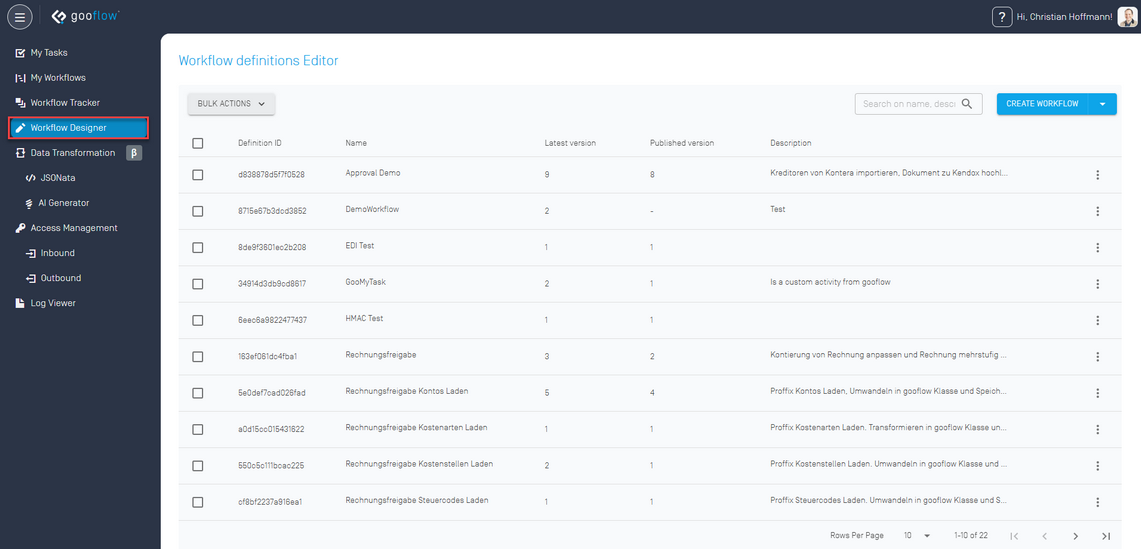
Workflow definitions Editor
Additional options such as unpublishing or deleting a specific workflow can be accesses by clicking on the "three dots" button on the right side.
In order for a workflow to be used to create new instances, the workflow must first be published. In the designer, workflows can be unpublished to remove them from the pool of active workflows. Unpublished and not yet published workflows are still available to be edited in the designer.
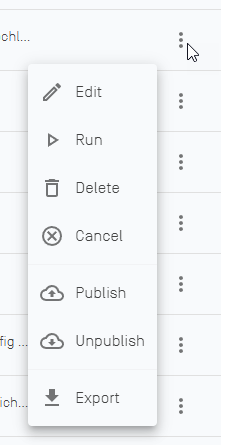
Workflow Aktionen
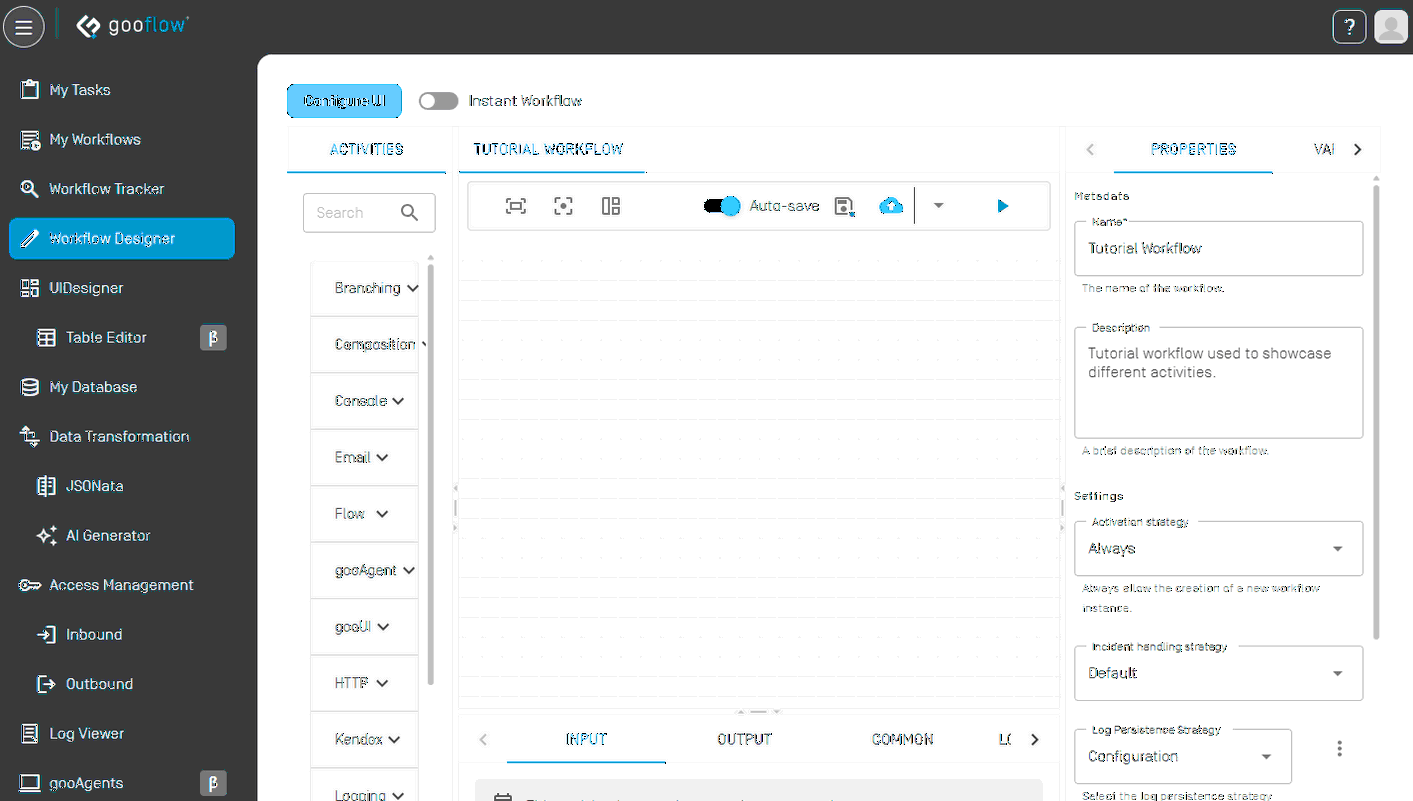
When opening a workflow, when no activity is selected, the workflow properties will be shown in the menu on the right hand side. By default the tab "Properies" is selected, here you can, among other things like the workflow name and description, set a general strategy for logging the details of each activity for new instances of this workflow. When selecting "Exclude", no details will be provided for activities in the Workflow Tracker unless specified differently in the activity itself.
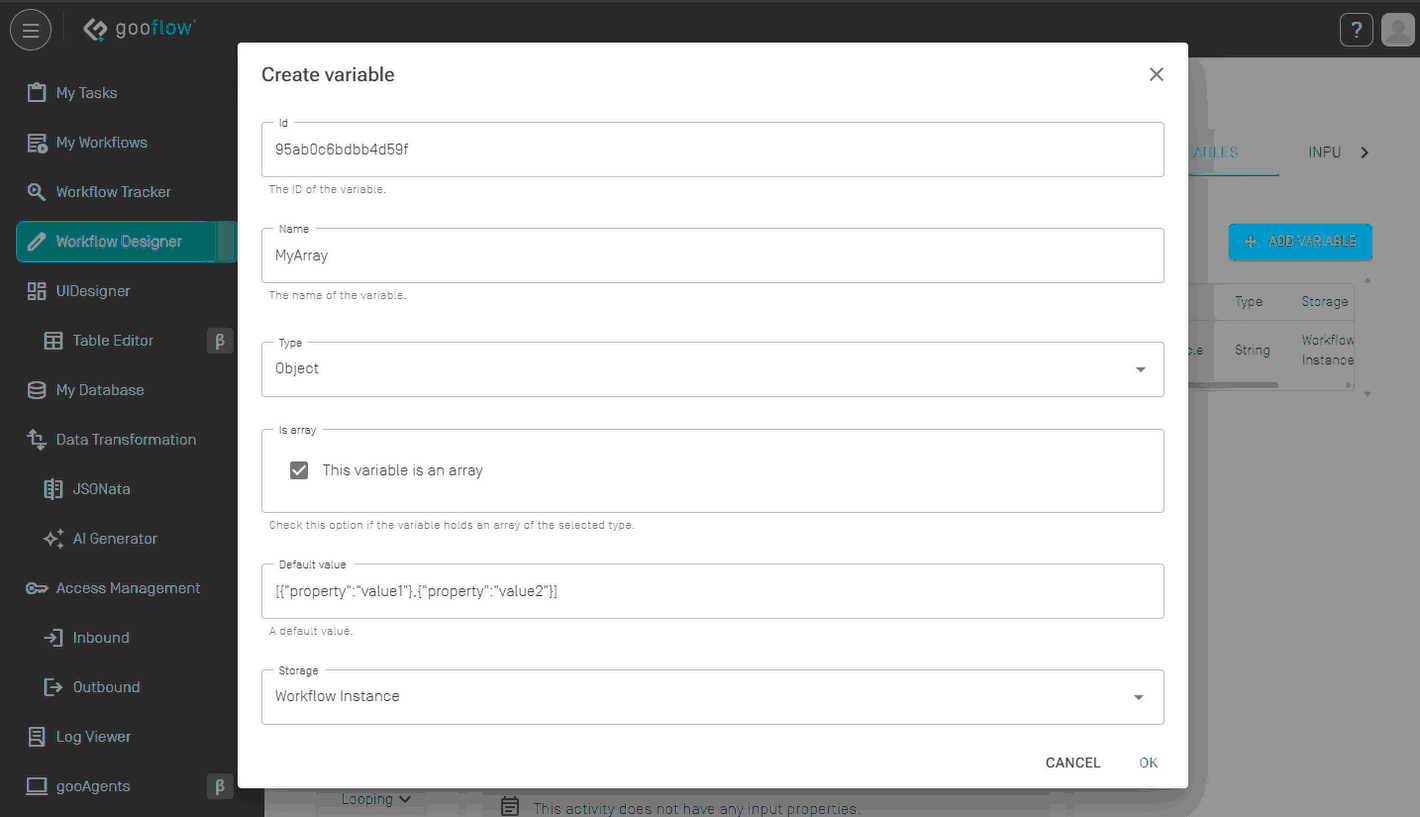
The tab "Variables" shows all variables that can be used within this workflow. Apart from name, data type and default value, a variable can be set to be an array with a check box.
The storage type selected determines if the value of a variable in a workflow instance will be saved into the gooflow database or not. If the option "Workflow Instance" is selected, the value will be saved into the database, if the option "Memory" is selected, the value will remain in the system memory and will be lost if the system is shut down or loses power otherwise.
Important: gooflow will always try to deserialize variables in order to display the values in the Workflow Tracker, which can cause problems if values are not proper objects while the data type of the variable would expect one. To avoid this issue, it is recommended to set variables to "Memory" storage if such values are to be expected.
The tab "Input/Output" allows for the definition of input and output parameters, similar as to how methods work in programming languages.
The tab "Version History" allows you to view past versions and roll back the workflow definition to a previous version. When rolling back, the current version will be saved first and a new version with the old configuration will be created, as to not lose any data.